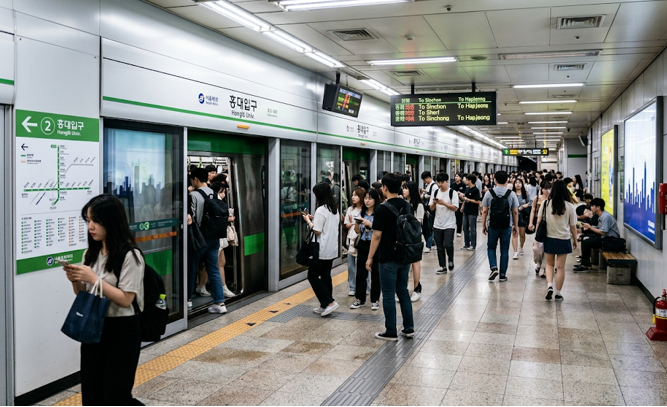
If you are visiting Seoul for the first time, the subway is one of the best ways to get around the city. It is fast, affordable, clean, and connects almost every major tourist area — often faster than a taxi, especially during rush hour.
Seoul’s subway is also genuinely tourist-friendly. Signs appear in English, stations are modern, and navigation apps make it easy to figure out, even on your very first ride.
Why Use the Seoul Subway?
For most travelers, it is the smartest way to explore the city. Here is why locals rely on it every day:
- Fast, reliable, and runs on schedule
- Far cheaper than taxis
- Clean, safe, and well-maintained
- Simple to navigate with apps
- Direct access to shopping, food, and major attractions
Step 1: Buy a T-money Card
The easiest way to ride the subway is with a T-money card. You can buy one at most convenience stores or subway stations:
- CU
- GS25
- 7-Eleven
- Subway station ticket machines
- Incheon Airport arrivals hall
Load money onto the card, then tap when entering and exiting the subway gates.
Recommended first top-up:
₩20,000 is a good starting amount for most visitors
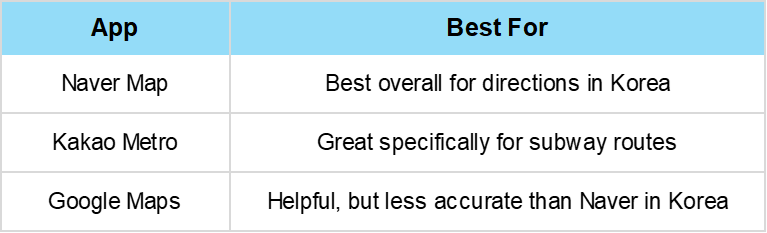
Step 2: Download a Navigation App
Locals rely on apps, and tourists should too.
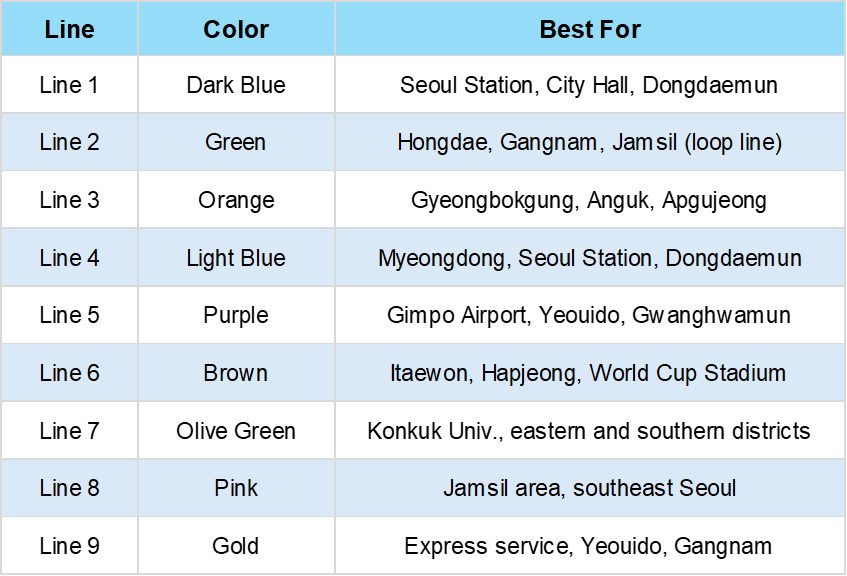
Step 3: Know the Main Subway Lines
Seoul has many subway lines, but most visitors stick to a handful. Here is a quick overview of the lines you are most likely to use:
Airport & Regional Lines
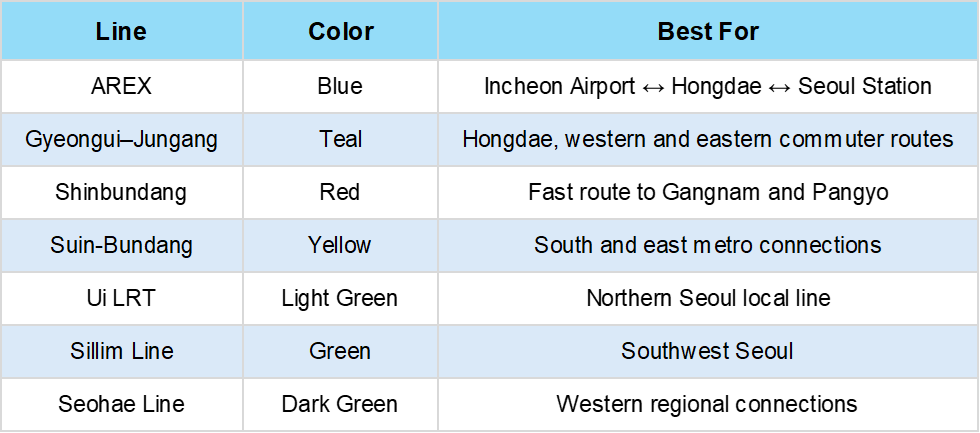
You do not need to memorize all of this. Just use Naver Map and enter your destination — it will do the rest.
Download Naver Map before your trip — it is the most reliable navigation app for Seoul subway routes, walking directions, and local travel in Korea.
** Most Useful Lines for Tourists
If you are visiting for a short trip, focus on these:
- Line 2 – Best overall coverage
- Line 4 – Myeongdong and Seoul Station
- Line 3 – Palaces and Bukchon
- Line 6 – Itaewon
- Line 5 – Gwanghwamun and Yeouido
- AREX – Airport connections
Step 4: Follow Station Signs
Most stations have signs in Korean, English, Chinese, and Japanese. Look for:
- Exit numbers
- Transfer arrows
- Platform direction indicators
- Line colors and station numbers
Step 5: Learn Basic Subway Etiquette
A few simple habits will help you blend in with locals.
Do:
- Let passengers exit before boarding
- Keep your voice low
- Stand in line on the platform
- Offer priority seats to elderly, pregnant, or disabled passengers
- Move toward the center of the car if it is crowded
Avoid:
- Blocking the doors
- Talking loudly on your phone
- Eating messy food on the train
Step 6: Avoid Rush Hour
Trains become very crowded during peak commuting hours:
- Morning: 7:30 AM – 9:00 AM
- Evening: 6:00 PM – 7:30 PM
If your schedule is flexible, traveling outside these windows makes for a much more comfortable ride.
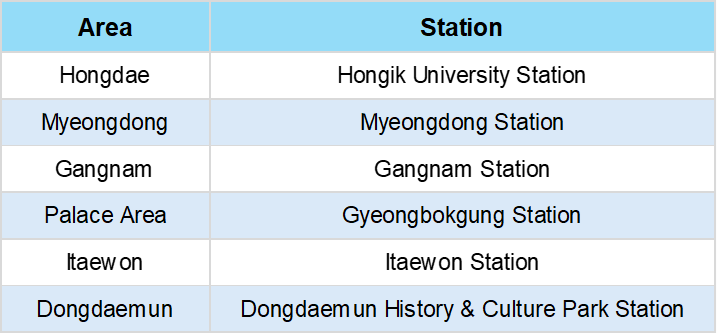
Step 7: Best Stations for Tourists
Step 8: Check Last Train Times
Most subway lines stop running around midnight. If you plan a late night out, always check the last train time on Naver Map or Kakao Metro before heading out — not after.
** Need a full subway map?
View the official Seoul Metro map provided by the Seoul Metropolitan Government.
👉View the Official Seoul Subway Map (PDF)
Source: Seoul Metropolitan Government
** YourTripKorea Tip:
The Seoul subway may look complicated at first glance, but after one or two rides it becomes second nature. Use a T-money card, trust your route app, and follow the signs.
Final Thoughts
The Seoul subway is the easiest, most affordable, and most efficient way to explore the city. It saves money, sidesteps traffic, and puts you in control of your own itinerary.
Even first-time visitors pick it up quickly — and once you do, you will wonder why you ever considered a taxi.